Tom and Jerry – A Timeless Chase Through Animation History
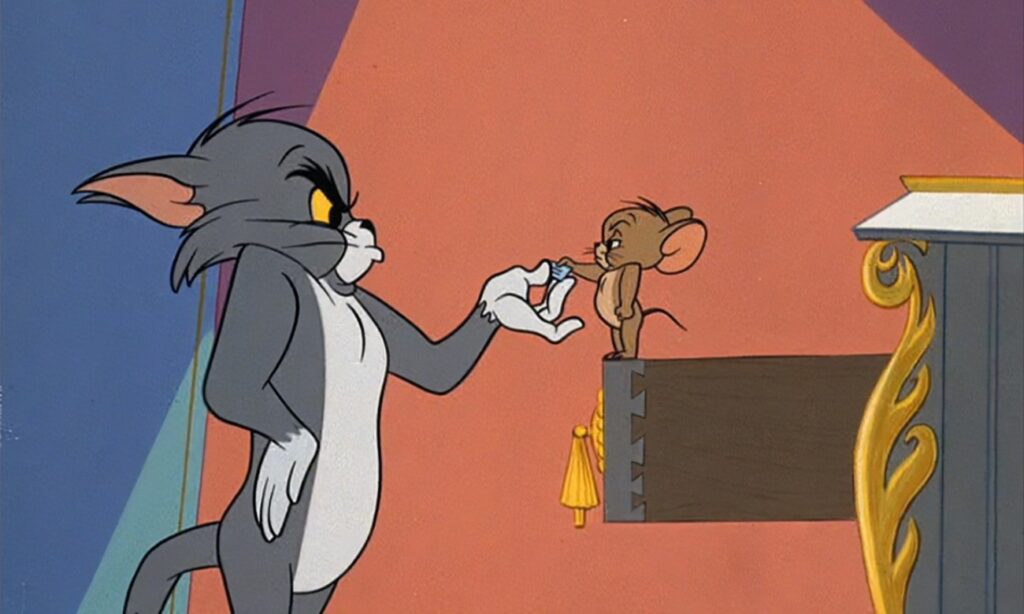
Since their first appearance in 1940, Tom and Jerry have captivated audiences around the world, weaving timeless slapstick humor with brilliant animation. Created by legendary animators William Hanna and Joseph Barbera, this iconic cat-and-mouse duo has left a legacy in the world of animation that remains relevant and beloved even today. Let’s delve into the history, creative minds, and enduring appeal behind Tom and Jerry.
The Birth of Tom and Jerry
The journey began at MGM in 1940 when animators William Hanna and Joseph Barbera were tasked with creating a cartoon that could compete with Disney and Warner Bros. The result was Puss Gets the Boot, featuring a gray cat named Jasper and an unnamed brown mouse. Surprisingly, Puss Gets the Boot was a huge success, even receiving an Oscar nomination for Best Short Subject (Cartoons). After this success, the duo was renamed Tom and Jerry, and Hanna-Barbera were given the green light to continue their escapades.
Hanna-Barbera’s Influence and the Golden Age of Tom and Jerry
Hanna and Barbera worked together to create 114 Tom and Jerry shorts between 1940 and 1958. Their partnership developed a formula that was as simple as it was effective: slapstick humor without dialogue, a universal appeal to audiences of all ages and backgrounds. Instead of relying on dialogue, the humor was conveyed through exaggerated facial expressions, impeccable timing, and dynamic music, often composed by Scott Bradley. Bradley’s music, with its fast-paced crescendos and dramatic flair, became an essential part of Tom and Jerry’s charm, matching every chase and slapstick moment beat for beat.
In the 1940s and 1950s, Tom and Jerry received an impressive seven Academy Awards for Best Animated Short Film, a record only matched by Disney’s Silly Symphonies. These classic shorts are often referred to as the “Golden Age” of Tom and Jerry, with each episode an innovative showcase of animation and storytelling.
The Evolution of Tom and Jerry
In the 1960s, after MGM closed its animation studio, the characters’ rights changed hands, leading to new interpretations. Directors such as Gene Deitch and Chuck Jones gave Tom and Jerry their own unique twists, introducing slightly different animation styles and new story ideas. While each iteration was distinct, the core of Tom and Jerry remained unchanged: the relentless, often humorous pursuit between cat and mouse.
Over the years, Tom and Jerry have evolved to include TV shows, movies, and even crossovers with other franchises. These adaptations continue to introduce new generations to the characters while maintaining the original charm and simplicity. The 2021 Tom and Jerry live-action/animation hybrid movie is a testament to how these characters still have a place in modern media, bridging the gap between nostalgic fans and younger audiences.
Why Tom and Jerry Is Still Relevant Today
In a world where animation has become increasingly complex, Tom and Jerry is a reminder of the power of simplicity. Its humor, which relies on visual gags and slapstick, transcends language barriers, making it universally accessible. The cat-and-mouse chase remains relevant because it reflects a timeless theme: rivalry. The comedic tension and clever antics of Tom and Jerry resonate with audiences of all ages, and their unpredictable escapades continue to bring laughter worldwide.
Even today, many streaming services and classic animation channels keep Tom and Jerry accessible to fans old and new. The simplicity of the characters, the visually driven humor, and the nostalgic value all contribute to their ongoing popularity. Moreover, with themes like perseverance, ingenuity, and humor, Tom and Jerry provides a fun escape that appeals to viewers in every era.